 U.S. energy firm National Fuel Gas is exploring strategic options for its integrated natural gas production business, with any deal set to value the unit at around $5 billion, five people familiar with the matter said.
The Williamsville, New York-based company, which traces its roots back to 1902 as a carve-out from John D. Rockefeller’s Standard Oil, is working with advisers including investment bankers at Goldman Sachs to study a wide range of scenarios for the business, which consists of natural gas-focused producer Seneca Resources and pipeline operator National Fuel Gas Midstream Company.
Among the options being considered are a full or partial sale, a merger with another publicly listed U.S. producer, or its spinoff into a separate publicly listed company, said the sources.
The sources cautioned that no transaction of any kind involving the natural gas production unit could ultimately materialize, and spoke on condition of anonymity to discuss private deliberations.
National Fuel, which has a market capitalization of around $7.6 billion, declined to comment, as did Goldman Sachs.
A divestment would grant National Fuel focus and cash to grow its utility business, at a time when power demand across the United States is soaring due to the boom in infrastructure supporting artificial intelligence build-out and wider industrial electrification efforts. The utility operations are also regulated, meaning their earnings are more stable and predictable to investors than natural gas production, which is governed by market prices for the commodity.
The move to explore options was also, in part, catalyzed by an inbound expression of interest in the natural gas production business earlier this year, three of the sources added, declining to disclose the bidder’s identity and the extent of the sale conversations.
SENECA RESOURCES
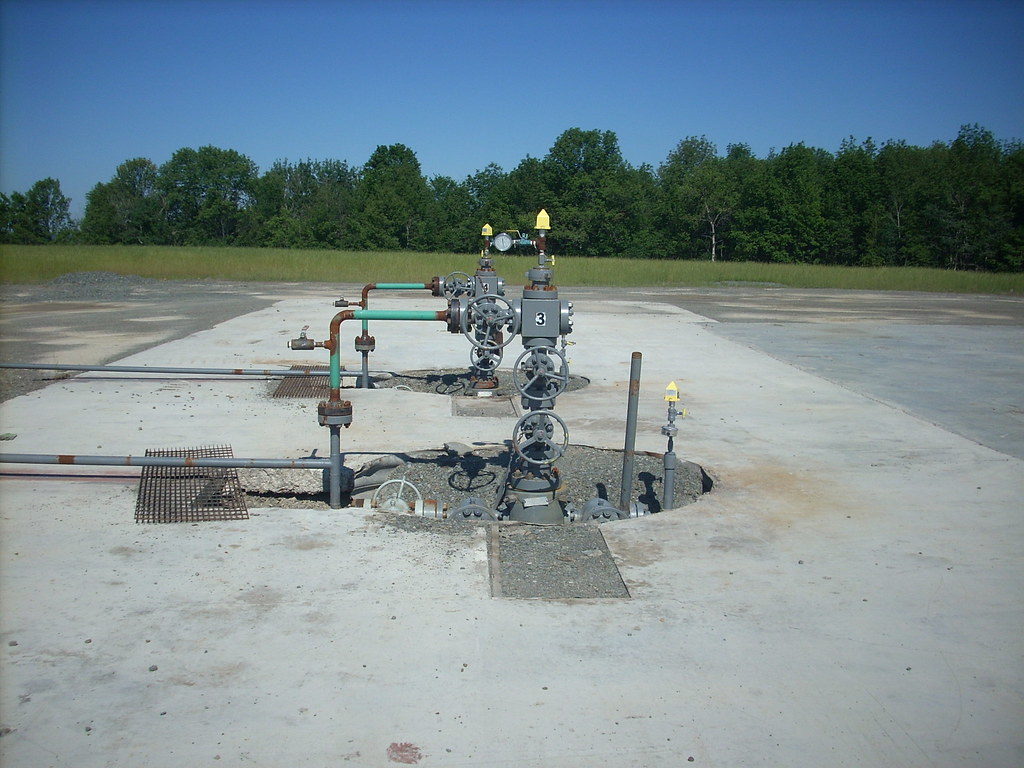
Seneca Resources is a Houston-based exploration and production company focused on natural gas, with operations across the Marcellus and Utica shale formations in Appalachia. It produces around 1.1 billion cubic feet per day of natural gas, according to National Fuel’s July earnings presentation. Energy infrastructure operator National Fuel Gas Midstream Company supports Seneca by transporting gas from well sites to larger pipelines that carry it to end consumers.
Seneca and the associated infrastructure constitute a considerable amount of National Fuel’s earnings — around 69% of adjusted earnings before interest, tax, depreciation and amortization (EBITDA), per the July presentation — meaning any divestment would have to be weighed carefully to ensure it does not undermine National Fuel’s remaining business, the sources said.
National Fuel management has previously highlighted how cash generated by its natural gas production unit provides capital to support organic growth projects and to pay down debt faster.
However, releasing cash from Seneca would allow National Fuel to fast-track an expansion of its utility business, both in terms of providing resources to pursue growth including deals but also to recalibrate its valuation multiple to that of a regulated energy business.
National Fuel currently trades around 11.2 times its earnings, while many pure-play natural gas utilities trade at more than 16 times, according to data provider LSEG. This is because natural gas producers trade at a lower multiple — the top four U.S. shale gas names trade between 8 times and 12.4 times earnings, per LSEG data — which weighs on companies such as National Fuel which have both businesses.
National Fuel provides natural gas utility services to around 756,000 consumers in New York and Pennsylvania, according to the July presentation. It is working to close a $2.62 billion purchase of CenterPoint Energy’s Ohio natural gas utility business, which will add a further 335,000 customers. The deal, National Fuel’s largest-ever acquisition, is slated to close on October 1.
(Reporting by David French in New York; Editing by Echo Wang and Nia Williams)