Most energy service companies assume they lose business to competitors. In reality, they often lose business to something else first: dissatisfaction.
Think about the last time a producer changed vendors, brought in a new contractor, or started evaluating alternative service providers. Chances are, they weren’t actively shopping for a replacement six months earlier. Then something changed.
- A project ran behind schedule.
- Communication became inconsistent.
- Costs increased without an improvement in value.
- Response times slowed.
- Operational issues started piling up.
Whatever the reason, the customer became dissatisfied enough to begin questioning the status quo.
This creates what many sales experts refer to as a “window of dissatisfaction” – a temporary period when a buyer becomes open to change.
And for energy service companies, it may be the most overlooked sales opportunity.
Buyers Don’t Change Vendors Just for Fun
The energy industry, in particular, is built on relationships. Producers and operators often work with the same service companies for years, sometimes decades. Changing vendors introduces risk, uncertainty, and operational disruption.
That’s why most buyers don’t wake up one morning and decide to look for alternatives.
They need a reason, or a trigger.
In our experience, dissatisfaction is often triggered by one of several common events:
- Service quality begins to slip
- Safety or operational incidents occur
- Key account people leave
- Costs increase without a clear justification
- Project execution falls short of expectations
- Growth creates new operational requirements
- A new manager or executive brings fresh perspectives and vendor preferences
None of these events automatically results in a lost customer. But they do create something important: curiosity.
Now, the customer begins asking questions like:
- Could there be a better option?
- Who else provides this same service?
- What are other operators using?
That curiosity is where buying behaviour begins.
The Digital Trail Most Companies Never See
Historically, these moments were almost impossible to identify. Sales teams had to rely on personal relationships, market rumours, or simply being in the right place at the right time.
Today, however, buying behaviour often leaves a digital footprint:
- Engineers begin researching solutions.
- Operations teams visit supplier websites.
- Procurement teams compare vendors.
- Decision-makers consume technical content, case studies, and product information.
Before a single phone call is ever made, before a meeting is booked, and often before an RFP is issued, potential buyers are already investigating alternatives.
In other words, dissatisfaction creates research activity.
Research activity creates intent signals.
And these intent signals can now finally be measured.
Why Timing Matters More Than Ever
One of the biggest challenges in energy sales is timing.
Reach out too early and there is no urgency.
Reach out too late and the buyer may already be engaged with competitors.
The most successful sales teams are increasingly focused on identifying when that window of dissatisfaction opens. Not because they want to sell harder, because they want to engage when buyers are actually receptive.
This is where many top energy companies are beginning to rethink traditional business development strategies.
So instead of relying solely on cold outreach, networking, or waiting for opportunities to become public, they are combining those efforts with intent intelligence that helps identify active buying behaviour as it occurs.
Turning Signals Into Sales Conversations
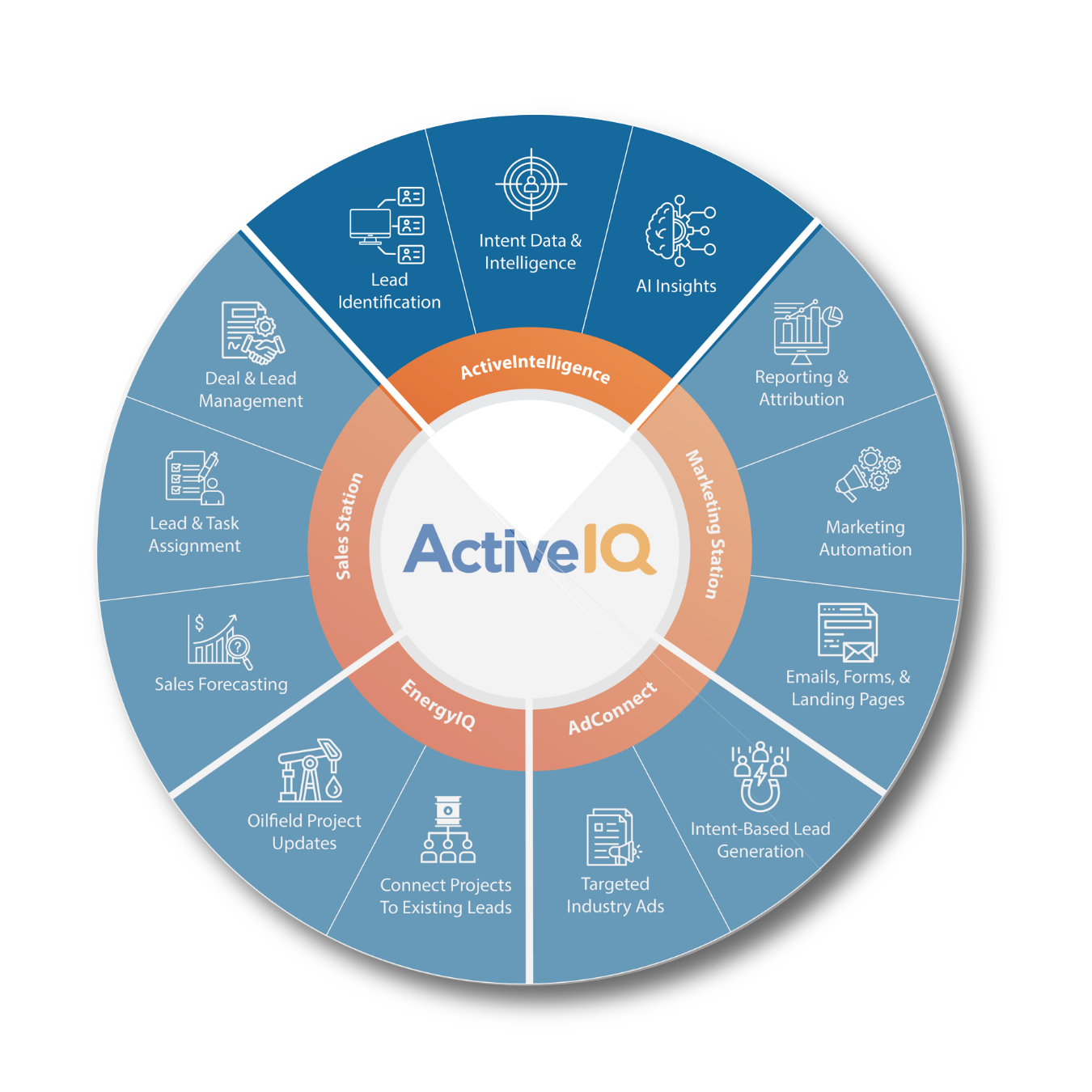
Luckily, here in Alberta, we have a true global leader, ActiveIQ, who helps leading energy companies identify digital intent signals that often emerge during these windows of dissatisfaction.
When a target account suddenly increases research activity, consumes relevant content, or demonstrates heightened interest in specific services, these behaviours can indicate that something inside the organization is changing.
Now, not every signal leads to an opportunity.
But collectively, they help sales teams focus their time and attention where meaningful conversations are most likely to happen.
Ultimately, the goal isn’t to replace relationships; it’s to help sales teams engage at the right time.
Today, the companies winning more business are often not the ones making the most calls. They’re the ones who recognize when a customer is open to a new conversation.
And that conversation often starts long before anyone announces they’re looking for a new vendor.
How many opportunities is your team missing simply because you’re not seeing the signals?
If you’d like to see how ActiveIQ helps energy companies identify these intent signals, prioritize opportunities, and engage prospects at the right time, we’d be happy to show you what’s happening in your market today.
Request Your Complimentary Market Intelligence Review
This article is sponsored content, written and paid for by the advertiser. We do not endorse or take responsibility for the accuracy of the information presented. It has not been reviewed by our editorial team, and the opinions expressed are solely those of the sponsor.