Three key findings from PwC’s field worker survey
The pandemic has transformed how we work, not just in the office, but also in the field—for front-line and essential workers and those required to be on the job site to get work done.
PwC’s Canadian field worker study* (conducted February 11 to 17, 2021) takes the pulse of Canadian field workers—full or part-time employees who pre-pandemic spent most if not all of their workday in a non-office setting and are employed by a larger company or organization.
The report reveals three key findings:
1. Untapped potential in upskilling and technology in the field
A majority of energy and utilities field workers think they have the tools and technology they need to do their jobs. But most weren’t using technology very much or at all both before (59%) and during (59%) the pandemic. And when asked if technology has helped them work differently since COVID-19, nearly half of respondents (49%) said no.
These stats highlight how little technology is being incorporated into the daily routines of non-office employees. Although it may be necessary for energy and utilities workers to be on the job site, there’s a lot of potential for tech-enabled improvements in operations, efficiency, communication, and safety. Energy and utilities field workers seem to agree—53% say they see potential for technology to improve aspects of their job.
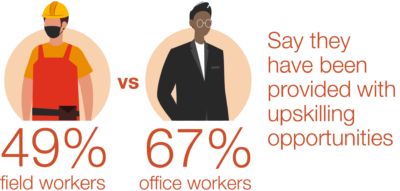
What’s more the digital divide becomes apparent when looking at access to upskilling opportunities. Only 49% of all field workers compared to 67% of office workers say they’ve been given upskilling opportunities. Organizations must think of their entire workforce if they want to reap the benefits of upskilling and technology.
2. Employee well-being must be prioritized
The pandemic has caused a substantial drop in field workers’ well-being on the job.
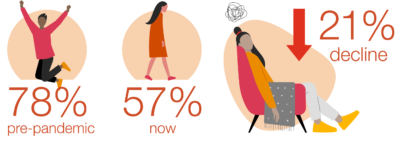
Health and safety on the job site and burnout are the top challenges being faced by field workers in energy and utilities. What’s more, those who identify as women are disproportionately affected by these impacts: in addition to being significantly more likely to report major disruption to their jobs.
3. Disruption and adaptability—Leadership matters
Although energy and utilities field workers reported a lower level of COVID-19-induced disruption compared to other industries (36% reporting a high level of disruption compared to the national average of 56%) and most were able to adapt within two months, the survey found that good leadership has a positive impact on organizations’ ability to adapt quickly, employee well-being, perceptions of health and safety, and employees’ ability to do their jobs effectively.
In fact, nearly half of those who say their leadership was very effective were able to immediately adapt to disruption caused by the pandemic. Businesses that adapted quickly also tend to be more digitally progressive, such as giving employees upskilling opportunities and incorporating technology into their work.
Field workers who rated their leadership very effective saw the benefits of:


COVID-19 has only accelerated the pace of change for how we work and conduct business in Canada. Organizations must ensure they have the necessary tools, workforce structure and skills in place to be successful in the increasingly digital future.
To read PwC’s complete report and recommendations on how you can move past each of the outlined challenges visit www.pwc.com/ca/fieldworkersurvey.
To discover how you can bring your workforce of the future into focus visit www.pwc.com/ca/workforceofthefuture.
© 2021 PricewaterhouseCoopers LLP, an Ontario limited liability partnership. All rights reserved.
PwC refers to the Canadian member firm, and may sometimes refer to the PwC network. Each member firm is a separate legal entity. Please see www.pwc.com/structure for further details.
This content is for general information purposes only, and should not be used as a substitute for consultation with professional advisors.