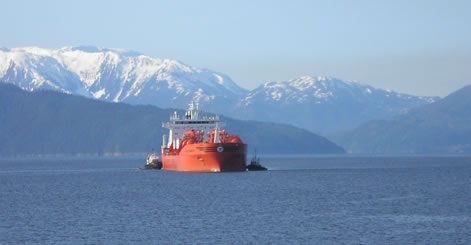
 The province of British Columbia announced a deal with Canada’s federal government on Thursday that maintains the federal ban on oil tankers along the country’s northwest coast, but appears to open the door to neighboring Alberta’s proposal for a new crude oil pipeline if a different route is proposed. The deal was announced just hours before Carney is expected to travel to Alberta to join Premier Danielle Smith as she announces her province’s proposal for a new pipeline with the capacity to transport 1 million barrels per day of Alberta crude oil to the B.C. coast for export overseas. Carney has tried to strike a balance between growing Canada’s oil industry, reducing its reliance on the U.S., and preserving some of Canada’s environmental policies. Canada currently has one West Coast oil pipeline to access Asian markets. Ottawa’s environmental policies, especially under Liberal former Prime Minister Justin Trudeau, stoked anger in oil-rich Alberta and fueled a nascent separatist movement. The province is due to hold a non-binding referendum on October 19 to decide whether to begin the process of splitting from Canada.
While Alberta has said it favours a pipeline route to B.C.’s northwest coast, which is geographically closer to Asia than the province’s southern coast, B.C. has long been concerned about the environmental risk of a potential oil spill in the ecologically fragile area. But British Columbia Premier David Eby on Thursday appeared to open the door to a pipeline going through his province, as long as the tanker ban remains in place and the northwest coast is protected.
“This agreement doesn’t require us to support any pipeline proposal from Alberta, however, as I’ve said before, we recognize our constitutional position, and we do not have the authority to stop a new pipeline. We will not be going to court to fight a pipeline project,” Eby told reporters. Smith is expected to unveil her province’s crude oil pipeline proposal at 8 p.m. EDT (midnight GMT). The proposal does not yet have a private-sector proponent. The federal government also pledged to accelerate the building of new liquefied natural gas projects in B.C. to triple LNG production in the next decade.
(Reporting by Maria Cheng in Ottawa, Amanda Stephenson in Calgary and Bhargav Acharya in Toronto; Editing by Paul Simao)