• Sign up for the Daily Digest E-mail
  • X
  • LinkedIn
  • See more results

    Generic selectors
    Exact matches only
    Search in title
    Search in content
    Post Type Selectors

BOE Report

Sign up

See more results

Generic selectors
Exact matches only
Search in title
Search in content
Post Type Selectors
  • Home
  • StackDX Intel
  • Headlines
    • Latest Headlines
    • Featured Companies
    • Columns
    • Discussions
  • Well Activity
    • Well Licences
    • Well Activity Map
  • Property Listings
  • Land Sales
  • M&A Activity
    • M&A Database
    • AER Transfers
  • Markets
  • Rig Counts/Data
    • CAOEC Rig Count
    • Baker Hughes Rig Count
    • USA Rig Count
    • Data
      • Canada Oil Market Data
      • Canada NG Market Data
      • USA Market Data
      • Data Downloads
  • Jobs

Quenching Thirst in the Duvernay

October 16, 20196:56 AM Canadian Discovery0 Comments

The Duvernay is a Thirst Trap

About 23 million cubic meters (m3) of water was used for fraccing in Alberta in 2017 (AER, 2018), and nearly 99% of that volume was non-saline.

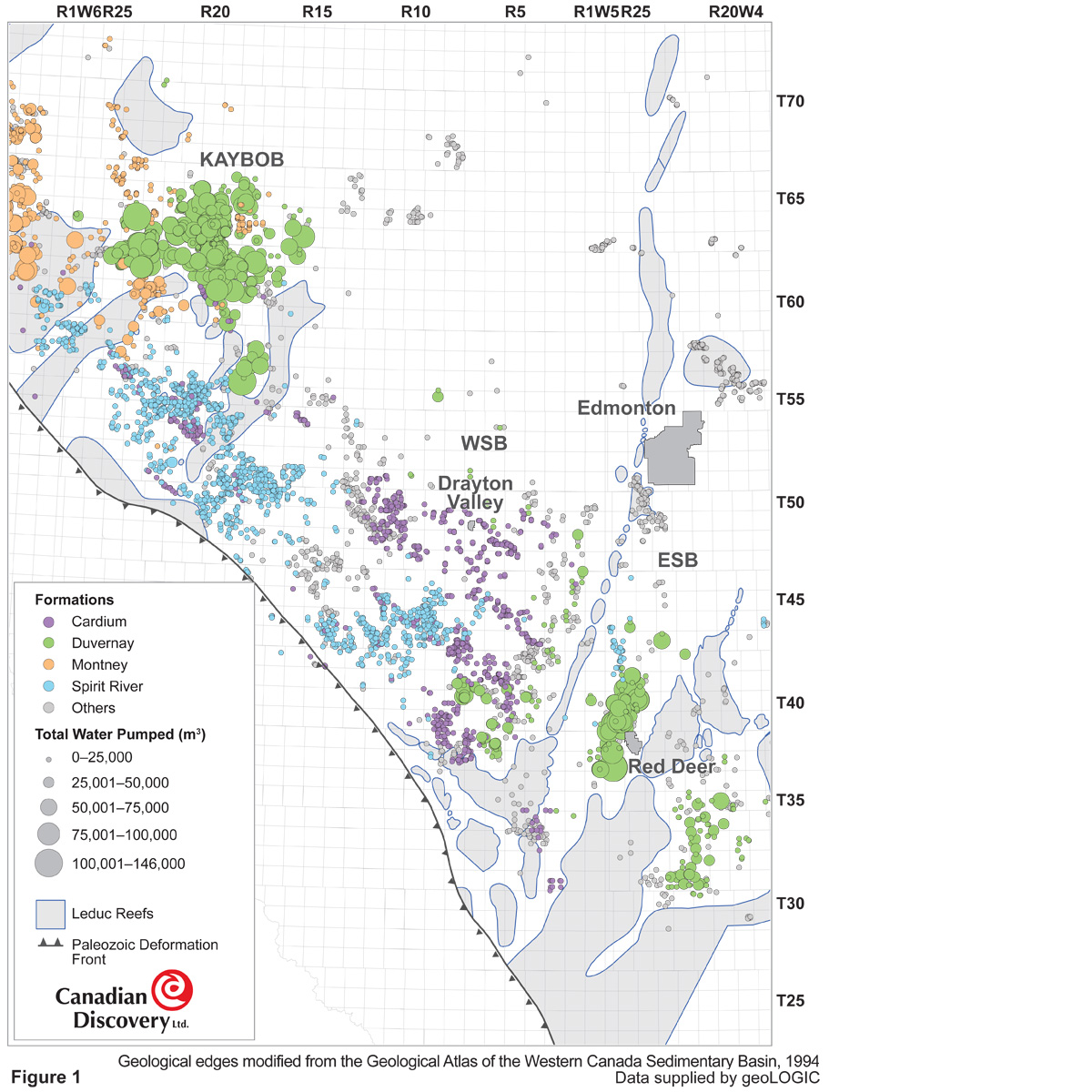
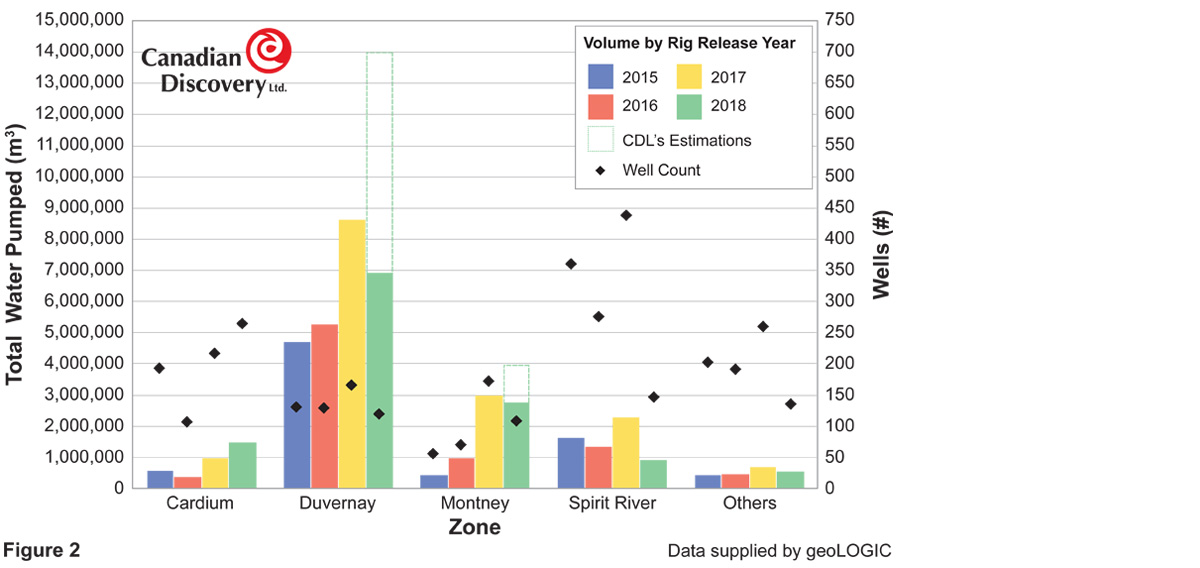
Within the Duvernay fairway (figure 1), the Spirit River has been the most drilled zone by well count, followed by the Cardium and the Duvernay. Though it has fewer wells, the Duvernay far exceeds the Spirit River and Cardium in terms of total volume of water pumped (figure 2). In 2017, 8.6 million m3 was pumped into the Duvernay, nearly three times that of the combined pumped volume of the Cardium and Spirit River (geoLOGIC, 2019). Data for 2018 are incomplete, but Canadian Discovery estimates that the total Duvernay volume may be as high as 14 million m3.
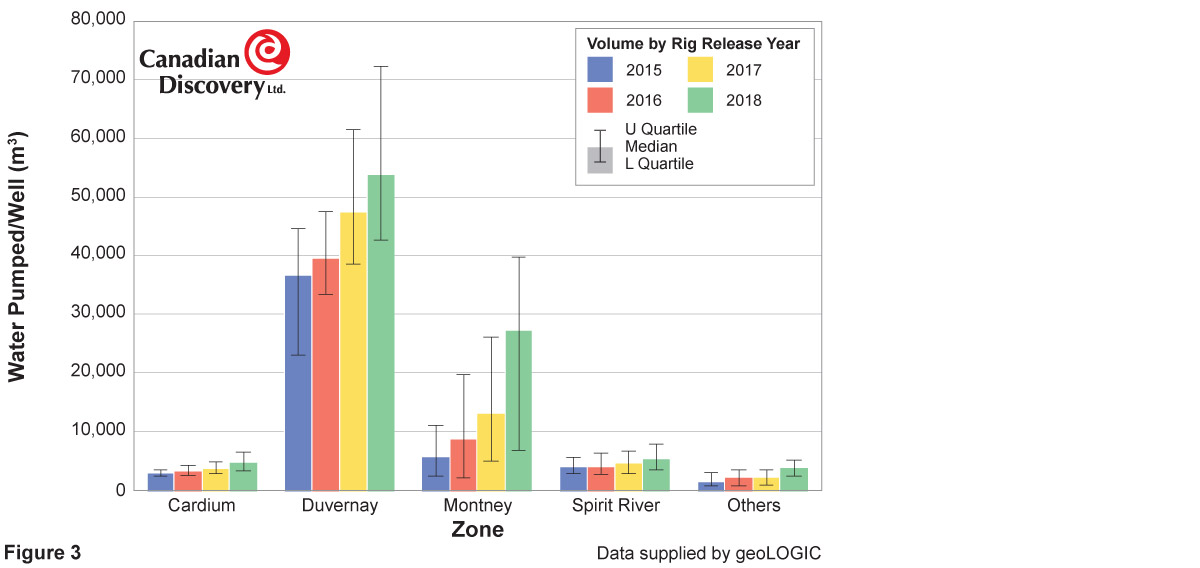
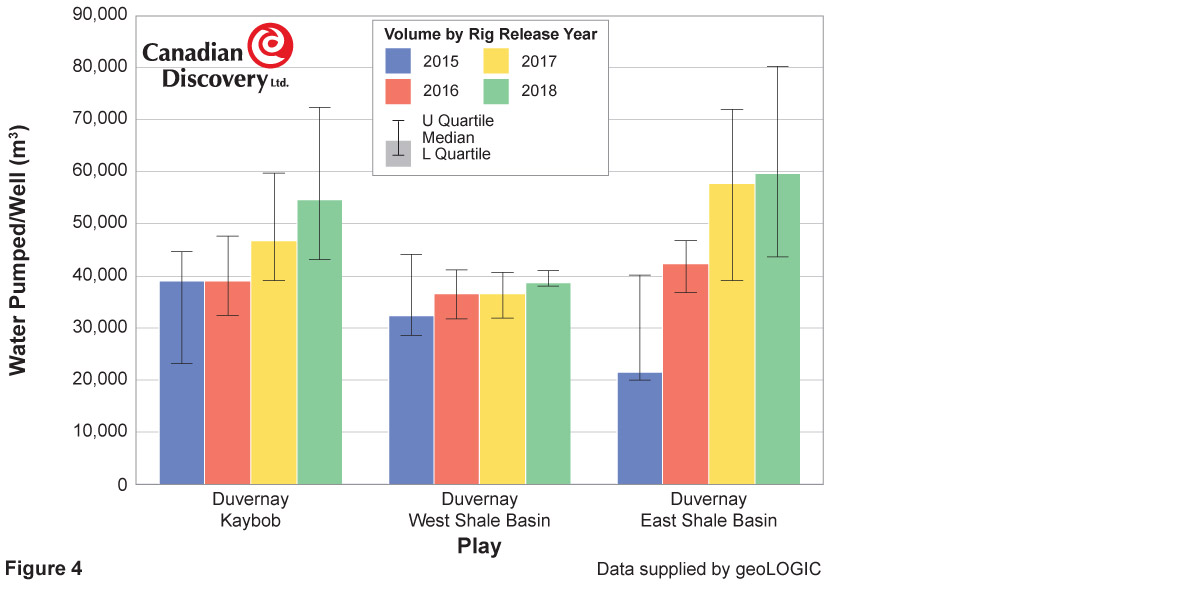
The median volumes on a per well basis have consistently increased from 2015 to 2018 for every zone, with the Duvernay consistently reporting the largest volumes (figure 3). In 2018, the median volume for the Duvernay was 54,000 m3, double that of the Montney (27,000 m3). Although Kaybob has the highest volume of total water pumped every year, operators in the East Shale Basin have used larger volumes on a per well basis than operators at Kaybob since 2017 (figure 4).
The Duvernay uses more frac water on a per well basis than other zones in Alberta and water use continues to trend sharply upwards. Currently, the majority of this water is sourced from surface waters but as development and public concerns continue to grow, a move towards groundwater sources may be desirable.


References

Alberta Energy Regulator. 2018. Alberta Energy Industry Water Use Report – Hydraulic Fracturing. Accessed July 2019. https://www.aer.ca/protecting-what-matters/holding-industry-accountable/industry-performance/water-use-performance

geoLOGIC, 2019. Well Completions & Frac Database.

Cardium Duvernay Montney

Follow BOE Report
  • Facebook
  • X
  • LinkedIn

Sign up for the BOE Report Daily Digest E-mail

Successfully subscribed

Latest Headlines
  • SECURE announces quarterly dividend and timing of 2026 first quarter results and conference call
  • US average diesel prices cross $5 a gallon as Middle East War tests global economy
  • Discount on Western Canada Select widens
  • ARC Resources Ltd. confirms quarterly dividend of $0.21 per share for April 15, 2026
  • Whitecap Resources Inc. confirms monthly dividend for March 2026 of $0.0608 per share

Return to Home
Alberta GasMonthly Avg.
CAD/GJ
Market Data by TradingView

    Report Error


    Note: The page you are currently on will be sent with your report. If this report is about a different page, please specify.

    About
    • About BOEReport.com
    • In the News
    • Terms of Use
    • Privacy Policy
    • Editorial Policy
    Resources
    • Widgets
    • Notifications
    • Daily Digest E-mail
    Get In Touch
    • Advertise
    • Post a Job
    • Contact
    • Report Error
    BOE Network
    © 2026 Stack Technologies Ltd.